Project - Hardware & console integration
spotmon
A remote followspot system built in-house. Spot operators point a moving light by hand from a controller built out of a dead one, with manual control over pan, tilt, intensity and iris, and console control over everything else.
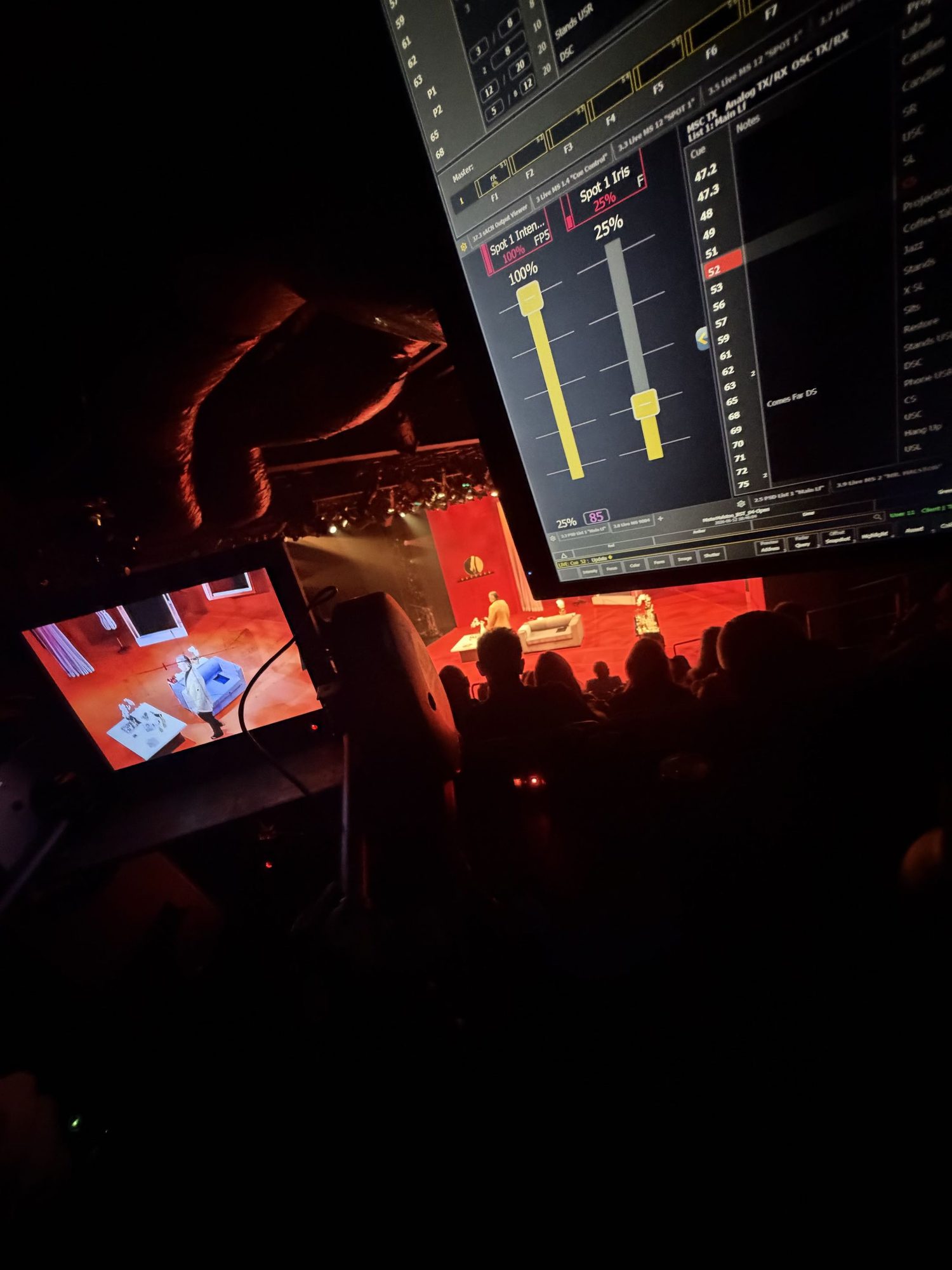
A moving light you can point by hand
Not every venue has a followspot position. This system allows you to put a spotlight anywhere you can hang a mover and the operator wherever you have room.
How it works
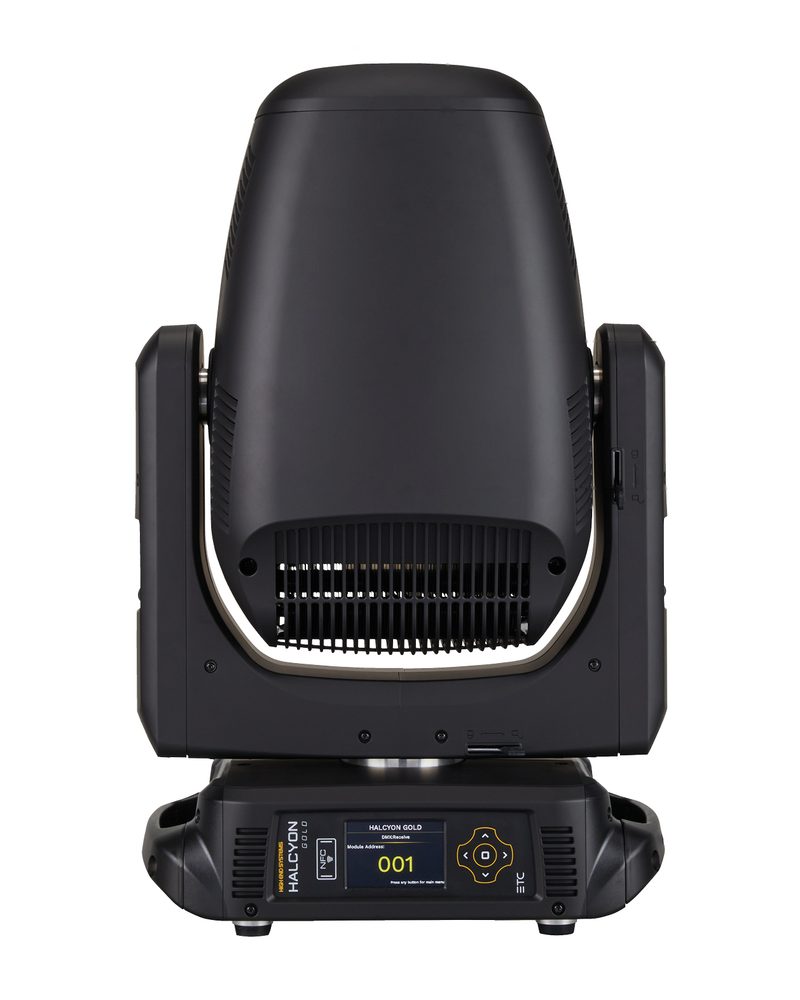
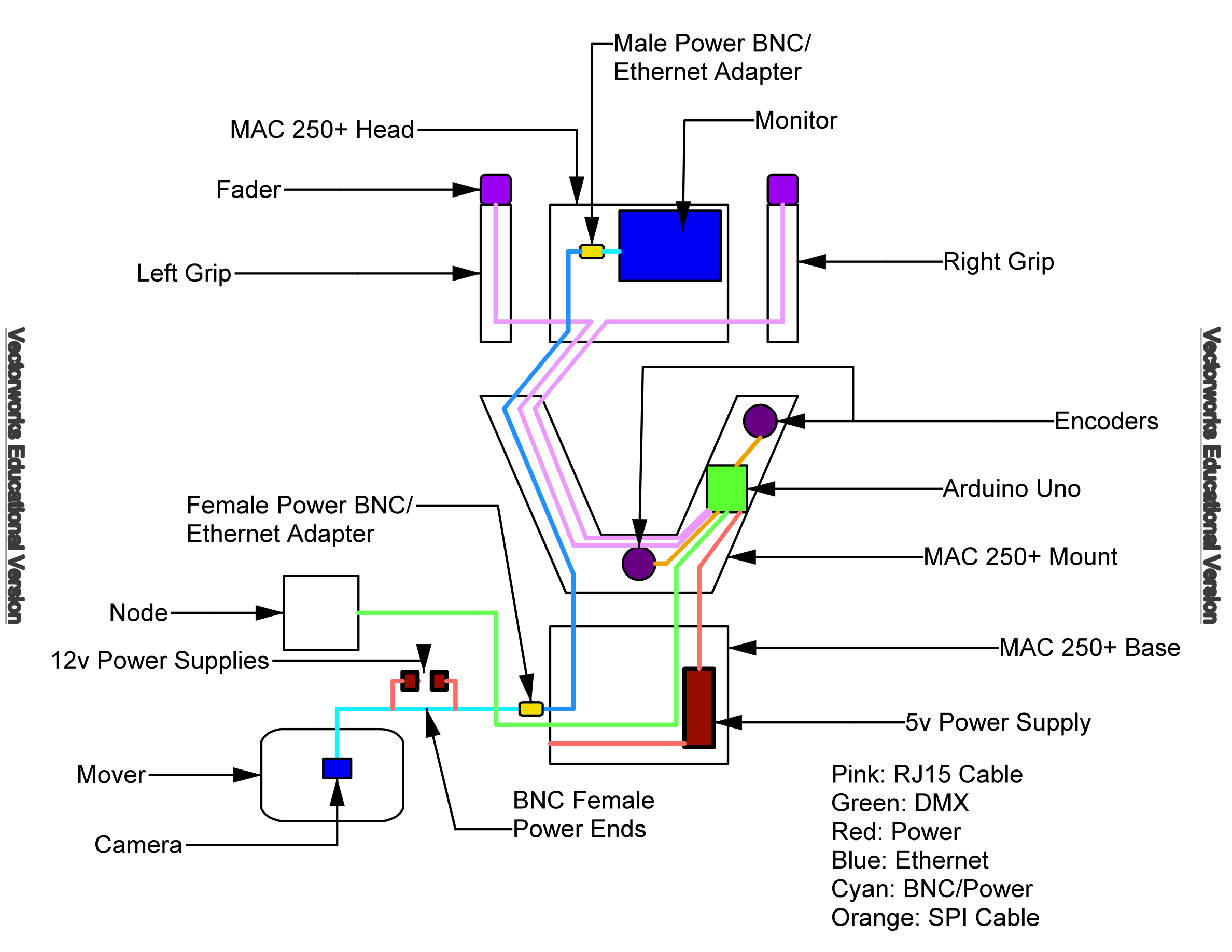
The station is a modified Martin MAC 250+ with most of its internal components gutted. Using the two grips, the operator pans and tilts it exactly as they would a high-end remote spot. Absolute encoders on the pan and tilt axes read that movement with 12-bit accuracy, an Arduino in the yoke turns it into DMX sent to an ETCnet node, and the lighting network sends those movements straight to the mover's universe.
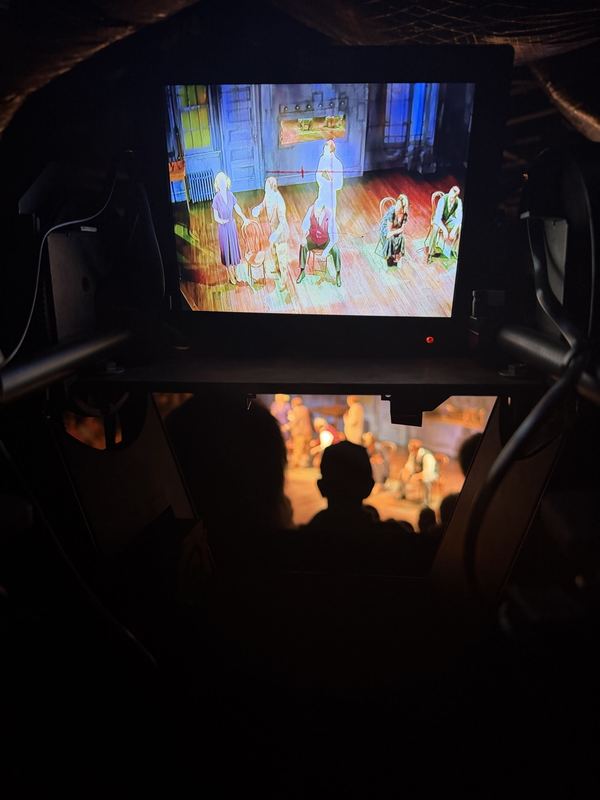
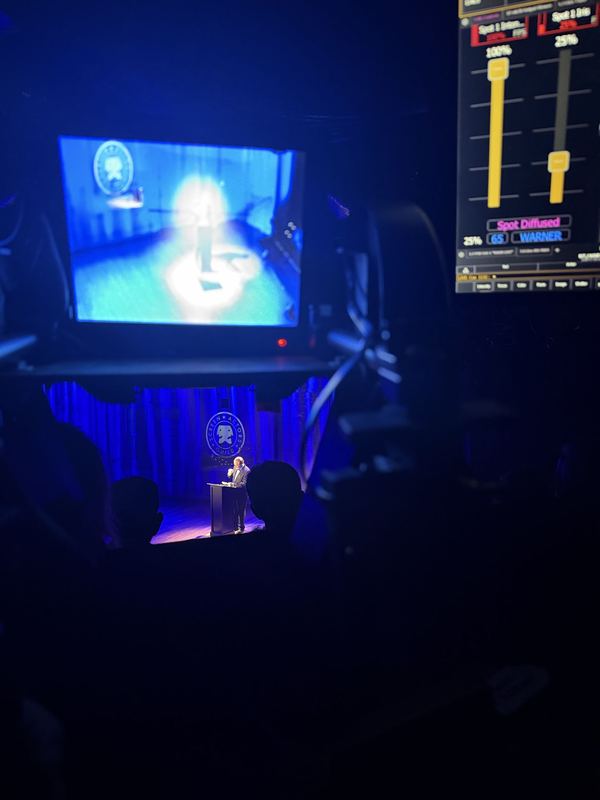
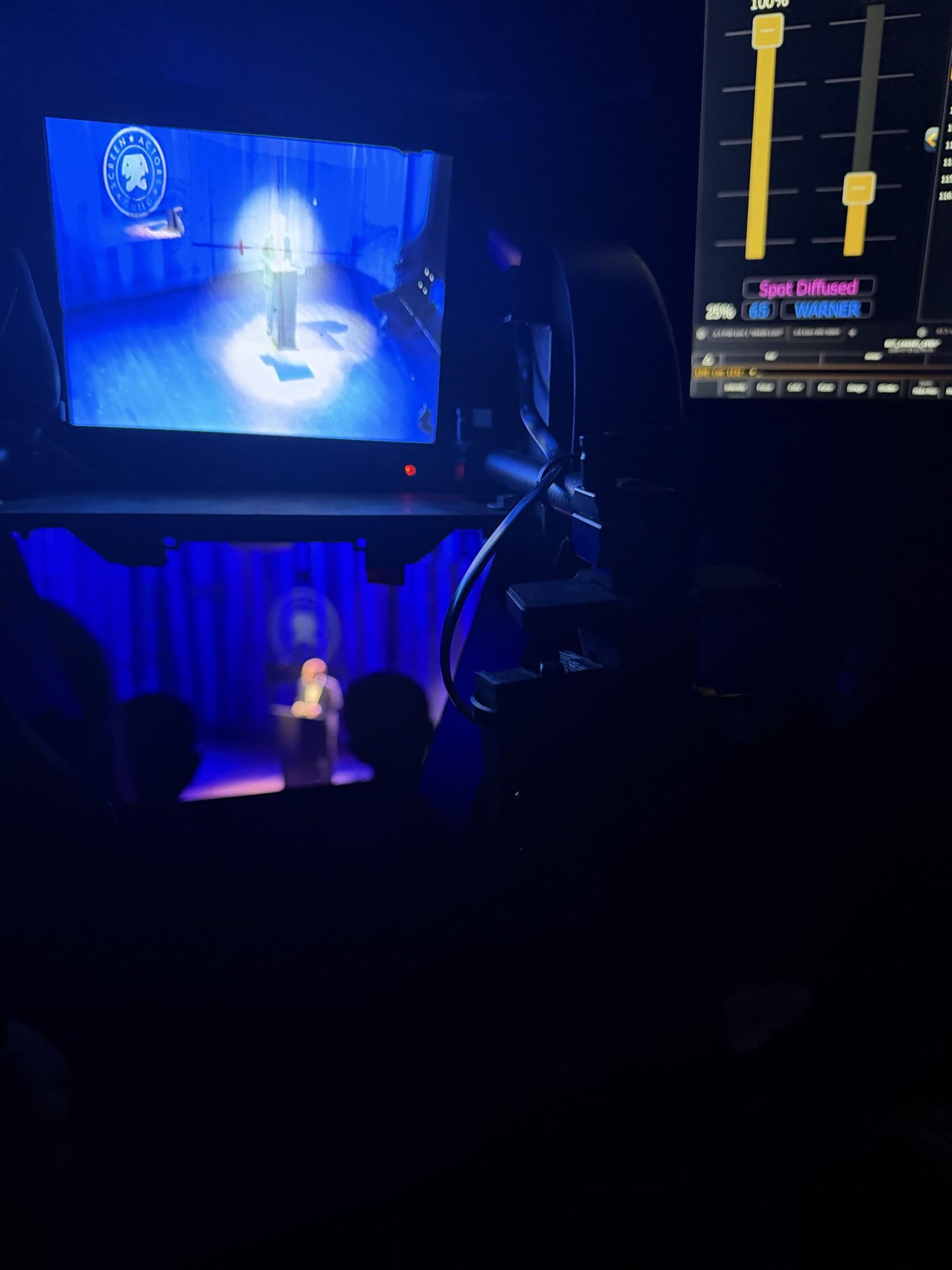
There is a fader on each grip, one for intensity and one for iris, and a camera on the live fixture feeds the monitor mounted on the head. The operator sees the spot on stage in real time, and can iris in or out as needed.
Three paths, and what the console keeps
ETC's ETCnet nodes are flexible enough that a standard DMX-out node can act as the receiver for the controller, routing each signal to the system that needs it.
- Pan and tilt go direct. Straight from the station to the node feeding the mover. The lighting console never sees them. This also allows for the console to regain control of the movers by just disconnecting the DMX cables connecting the controller to the node.
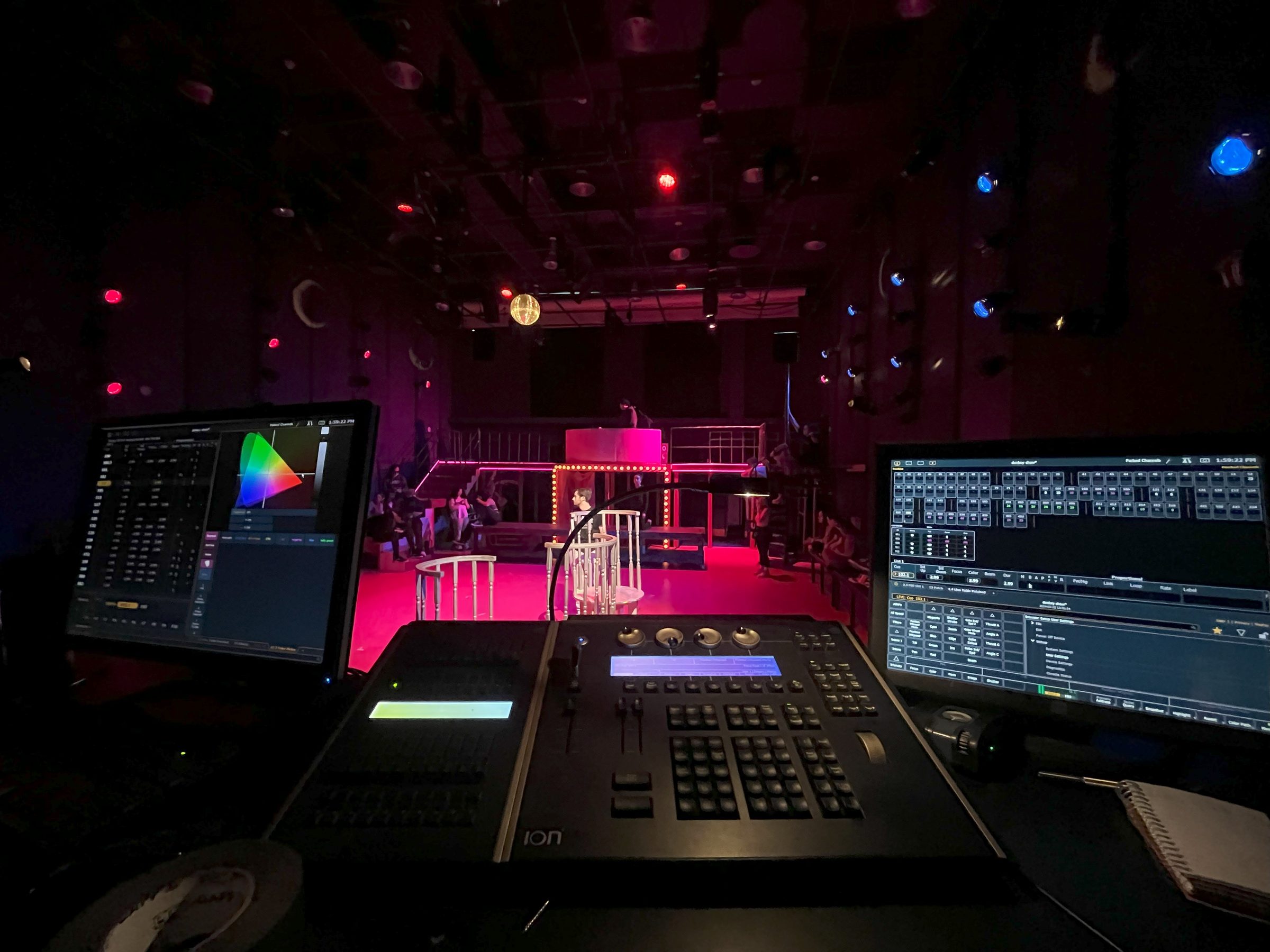
- Iris and intensity go through the console. The Arduino sends them into ETCnet nodes, the nodes direct them to unused universes, and Eos maps those values onto faders so the console treats the op's grip faders as submasters.
- Everything else is controlled by the console. Color, diffusion, and whatever other functions the mover has are still controlled by the console allowing for precise repeatable control of the spotlights. The intensity's maximum is also controlled by the console and only inhibited by the faders, so the level is trimmed rather than capped.
Splitting the signal this way also means the movers can be handed back to full console control quickly, for events that do not need spot operators at all.
The magic sheet
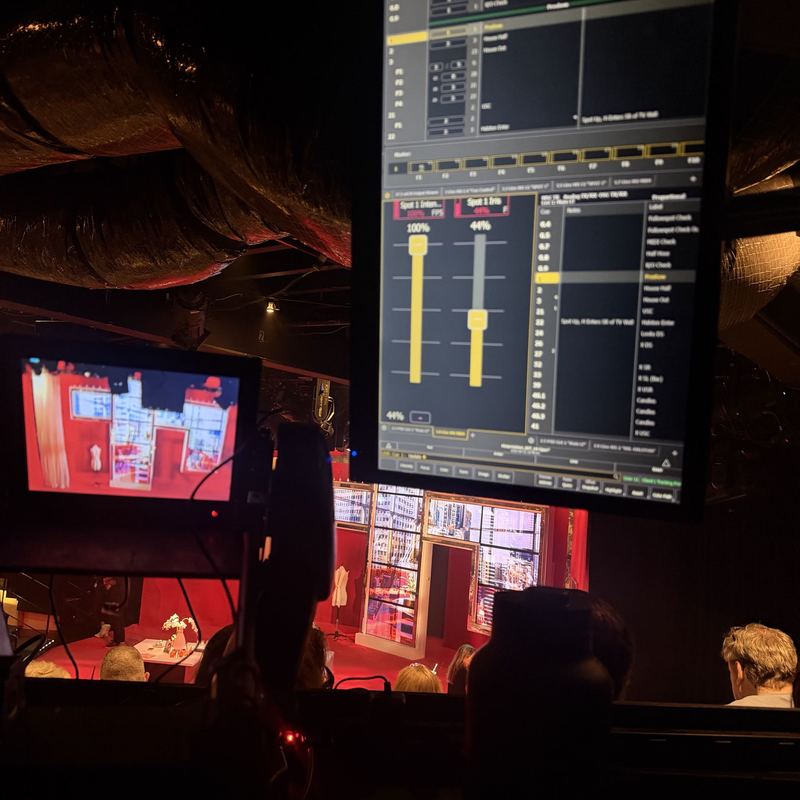
Rather than a separate monitor application, the spot display is an Eos magic sheet - which means it is built in the same show file as everything else and needs nothing extra on the network.
It carries a fader for iris and one for intensity per spot, plus the state the op cannot read off a number: whether the spot is diffused or on a hard edge, and which character it is currently picking up. Both of those are driven by palettes, so changing a look is a palette update rather than a rebuild.
Spots get their own cue lists
Spot intensity and color run on cue lists of their own, separate from the main LX list. Keeping them apart means the entire spot look sits in one consolidated view instead of being scattered through a show's worth of cues - and it can be moved, retimed or rewritten without touching the rest of the design.
High End Systems Halcyon Gold